



 Written by Shlomit Malka
10/07/2026
5 min
Independent, Not Alone
For a few days I was convinced there was a hive inside my thyme plant. What I found instead changed…

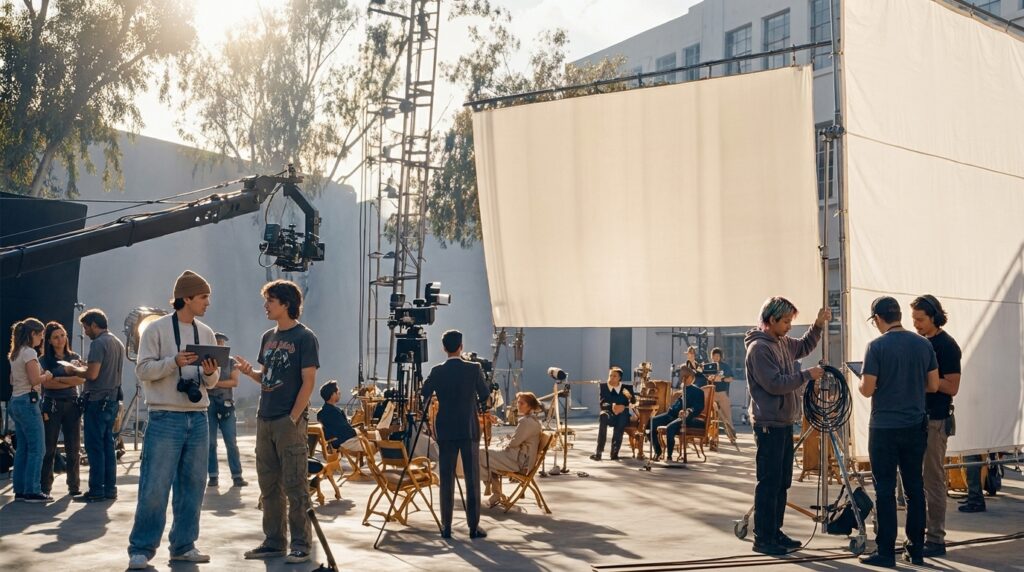
I read a post this week that I haven’t been able to put down. I won’t say who wrote it; the details don’t matter much, and anyway you’ve probably seen some version of it before. A creative person – one of the people who actually make the thing – looked back at a project that went on to make a fortune and realized how little of it had ever been theirs. The amount they were paid looked almost unreal next to the success their work helped create.
The internet did what it does. It fixated on the number. Was it fair, was it not, should they have known better. But the number wasn’t the part that stayed with me.
What stayed with me was everything that was never said.
Picture the moment the deal comes together. It’s rarely dramatic. Someone names a rate, someone says yes, everyone moves on. But look at who’s actually in that room.
The production has its own interests, and that isn’t a scandal – it’s their job to bring the thing in on budget, to spend as little as they responsibly can. The recognizable names have agents and lawyers whose entire purpose is to protect their upside. There are people in that room whose full-time work is making sure certain people come out ahead.
And then there’s the person doing the work. Pouring themselves into it. Often the most essential pair of hands on the whole project. With no one – not a single person – whose job is to be on their side.
That’s not a story about a villain. It’s a story about who had someone watching their back – and who had no one at all.
Here’s the part that quietly gets me. When that person said yes, they weren’t only agreeing to a low rate. They were agreeing to terms they never thought to question – because no one ever surfaced them.
Did anyone mention who would own the work once it was finished? Whether they’d share in anything if it became a hit? Who covers their expenses? When, exactly, they’d be paid – and what happens if that date quietly slips? Whether they’d even be credited at all?
Probably not. Not because they were careless, and not because they looked at those things and waved them away. But because no one whose job it was to look out for them was there to lean in and say, “Wait – these are yours to ask for, too.” You don’t negotiate for what you don’t know exists. Whole sections of the conversation simply never opened.
The people with representation walk into that room already knowing where the lines are. Everyone else walks in and finds out – sometimes years later, looking back – that there were lines at all.
The reflex is to tell creative people to toughen up. Know your worth. Read the fine print. Negotiate harder. As though the problem were a failure of nerve.
But you can’t negotiate harder for terms you’ve never been shown. You can’t read fine print no one handed you. The gap was never really about confidence. It was about who had the information and who had someone looking out for them – and who had neither.
I don’t think the answer is to make every creative person hire a lawyer they can’t afford. I think it’s something quieter, and bigger.
For a long time we’ve called all of this “standard.” Standard rates, standard terms, the way it’s done – as if there were some agreed-upon floor everyone was working from. But the longer I look, the more I doubt the standard was ever real. There’s no protected baseline for creative crew or independent creators, no shared rulebook written with them in mind. How could there be? Protecting them was never truly in anyone’s interest but their own. So we accepted it. We learned to call broken systems “just how it works,” and to treat being underpaid and uncredited as the toll for getting to do what we love.
That doesn’t have to hold any longer.
What the represented few have always known isn’t secret. It’s just never reached the people who needed it most. The lived experience is here. The shared data is here. And the technology has finally caught up enough to put what used to require someone in the room into the hands of everyone who isn’t.
We’re living through a real turning point for creators. And for the first time in a long while, there’s real momentum behind them – the kind that could carry all this talent into their next chapter.
 Written by