 Written by Shlomit Malka
10/07/2026
5 min
Independent, Not Alone
For a few days I was convinced there was a hive inside my thyme plant. What I found instead changed…

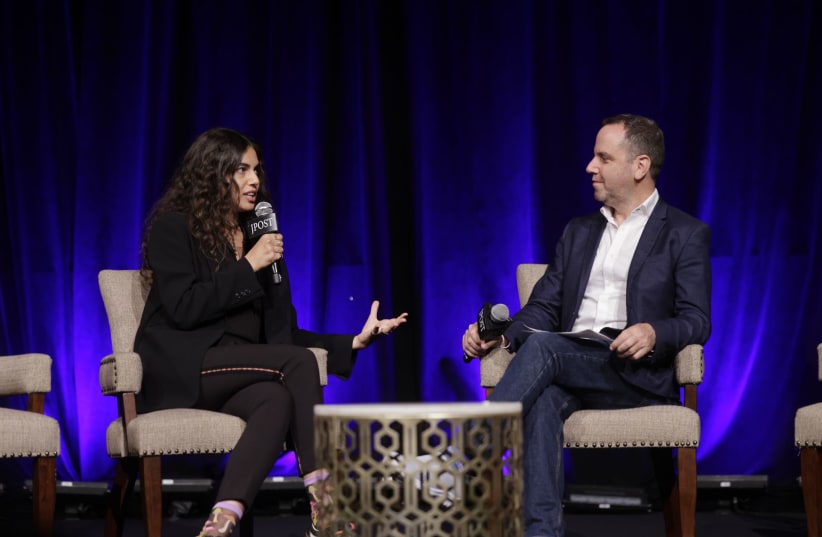
When Shlomit Malka spoke with The Jerusalem Post, she did more than introduce Happ.
She described the reality that led us to build it.
Creative professionals enter their industries because they are talented photographers, designers, models, producers, directors, writers or artists. But as their careers grow, the work surrounding their craft grows with them.
Suddenly, they are not only creating. They are managing clients, coordinating teams, tracking budgets, handling payments and making business decisions.
Shlomit described this shift as creatives “moving from being artists to being founders and business owners.”
For us, that is not simply an interesting trend. It is the starting point of Happ.
Creative work often looks effortless from the outside.
People see the final campaign, production, photograph, design or performance. They rarely see everything required to make it happen.
Behind almost every creative result is a complex network of people, conversations, approvals, schedules, budgets, payments and changing conditions.
Many independent professionals are expected to manage all of this without having a system built around the way they actually work.
They may be highly experienced in their craft, but no one necessarily taught them how to create a business plan, manage cash flow, coordinate several collaborators or build a sustainable operation.
This is the problem Shlomit identifies in the interview, and it is a problem we recognized from inside the creative world itself.
Good startups do not begin by searching for an impressive idea.
They often begin by paying attention to a problem that people have already learned to tolerate.
The challenge facing creative freelancers was already there. People were managing projects through a mixture of messages, documents, spreadsheets, payment systems and personal memory.
Each tool solved a small part of the process, but the professional was still responsible for connecting everything.
We did not want to create technology simply for the sake of creating technology. We wanted to understand why the working process felt so fragmented and what kind of environment could make it better.
That question became Happ.
Shlomit speaks about this challenge from personal experience.
After years in front of the camera, she became increasingly interested in everything happening behind it. She saw how creative ideas depend on collaboration, discipline, communication and the ability to adapt to different teams, locations and working conditions.
That perspective is important because Happ was not created by observing the creative industry from a distance.
It grew from understanding the people inside it.
Shlomit knows what it feels like to protect a creative vision while working within a professional production. She also understands that creative people do not need another system telling them how to create.
They need an environment that supports everything around the creative process.
One of the most memorable ideas in the interview is Shlomit’s observation that “creativity needs chaos,” while “the business needs structure.”
This sentence expresses the challenge at the center of Happ.
Creativity needs space. Ideas change, experiments fail, unexpected connections happen and projects develop in ways that cannot always be planned in advance.
Business needs something different. It needs clarity, responsibility, reliable communication and processes that help people move forward.
We do not believe these two sides should compete.
The role of good technology is not to remove the natural freedom of creativity. It is to create enough structure around it so that people can collaborate, get paid, stay organized and turn good ideas into real outcomes.
In the interview, Shlomit describes the vision of “one central hub” for creative teams and businesses.
That idea remains at the heart of Happ.
Happ brings the creative process and its business requirements into one connected environment. It is designed around the reality that creative projects involve people, relationships, money and constant collaboration.
Instead of treating communication, project coordination and financial management as unrelated activities, Happ connects them as parts of the same professional journey.
The goal is simple: creators should be able to spend less energy holding their business together and more energy moving their work forward.
There is an important difference between building a product for a market and building one from a genuine understanding of the people in it.
Creative professionals do not need to be “fixed.” Their independence, flexibility and unconventional ways of working are often the source of their best work.
The problem is that most business systems were not created with that reality in mind.
Happ is our attempt to build from a different starting point.
Instead of asking creative professionals to change the way they think, we ask how technology can better support the way they already create, collaborate and grow.
Shlomit’s interview presents the problem through her experience and her voice. I am writing about it as her partner in Happ and as someone who has taken part in turning that shared understanding into a product.
I am not covering the interview as a neutral observer. I am part of the story behind it.
That is also why the interview means so much to me. It captures the human problem behind the platform more clearly than a list of features ever could.
Shlomit and I came to Happ with different perspectives, but we recognized the same gap.
Creative professionals were building businesses without an environment designed for the way those businesses operate.
Our shared goal became creating that environment.
Not because we believe we have all the answers, but because we believe the problem deserves a much better answer than the tools that existed before it.
We believe creative professionals should not have to choose between artistic freedom and business stability.
We believe becoming successful should not require creators to move further away from the work they love.
We believe collaboration should feel connected, not fragmented across endless tools and conversations.
We believe technology should reduce the weight of running a creative business, not add another layer of complexity.
Most importantly, we believe creative people deserve the same level of professional infrastructure available to larger and more traditional businesses, without losing the independence that makes their work unique.
Toward the end of the interview, Shlomit shares her vision of Happ becoming a professional home for creative teams.
That idea goes beyond software.
A home is a place where people feel that they belong, where they have what they need and where they can build something over time.
This is the future we are working toward: an environment where creative professionals can find the right people, manage their work, build stronger businesses and bring their ideas to life.
Happ began with a real problem. It continues with a shared belief that the creative economy can work better for the people who make it possible.
The original Jerusalem Post article includes more from Shlomit’s interview about the changing creative economy, her professional experience and the vision behind Happ.
(Photos credit: MARC ISRAEL SELLEM/THE JERUSALEM POST)
I chose to cover it because the interview explains the reason behind Happ in a very human and accessible way.
Shlomit does not begin with technology or product features. She begins with creative professionals and the growing responsibilities they are expected to carry.
As her partner at Happ, I wanted to add the perspective of someone who has been part of turning that problem into a practical solution.
The most important idea is that creative professionals are increasingly becoming business owners, even if they never planned to become business owners.
They still want to focus on their craft, but their success now depends on their ability to manage many other parts of a business.
That gap between creative ability and business infrastructure is the central problem Happ was created to address.
We began with the problem.
The platform came later, after looking more closely at how creative professionals manage projects, teams, finances and collaborations.
We did not want to force a product into the industry. We wanted to understand what was missing and build around that need.
Most existing tools focus on one specific task. One may manage communication, another may track a project and another may handle invoices or payments.
Creative professionals are then left to connect all these separate parts themselves.
The challenge is not always the absence of tools. It is the absence of a connected environment designed around the complete creative process.
No. Project management is only one part of the problem described in the interview.
Creative work also involves professional relationships, changing teams, business operations and financial responsibilities.
Happ looks at these elements as parts of one connected experience rather than as separate tasks managed by unrelated systems.
It means that we should not try to control the creative process or make every project follow the same rigid path.
The product should provide clarity where clarity is useful, such as communication, responsibilities, budgets and payments, while leaving room for ideas and working methods to develop naturally.
Our goal is to organize the business around creativity, not to organize creativity itself.
Shlomit brought a firsthand understanding of how the creative world operates.
She experienced the visible side of the industry, but she also paid close attention to the teams, business processes and professional relationships behind every production.
That combination helped us define the problem in a way that comes from real experience rather than theory.
My perspective comes from building Happ alongside her.
Shlomit’s interview explains the problem through the experience of a creative professional. My role in this review is to connect that experience to the company we are building and to explain why the problem can become the foundation of a meaningful product.
We are approaching the same challenge from different angles, which has helped us develop a more complete understanding of it.
No.
We are building Happ around a clear problem and a strong point of view, but building a meaningful product requires continuous learning.
Creative professionals work in many different fields and in many different ways. Our responsibility is to listen, improve and make sure the platform continues to reflect the people it is intended to serve.
Happ is intended for freelancers, creative professionals, independent businesses and teams whose work depends on collaboration.
The interview focuses on the creative economy, but the underlying challenge is familiar to many independent professionals who must manage both their expertise and the business surrounding it.
I want them to recognize that the difficulty of balancing creative work with business management is not a personal failure.
It is a structural problem shared by many talented professionals.
Creators should not have to become experts in disconnected systems just to build sustainable careers. They deserve tools and infrastructure that understand how they actually work.
This review presents my perspective as Shlomit’s partner at Happ, but the original article gives readers the opportunity to hear the vision directly from her.
It provides the personal experience behind the idea and shows how the problem, the founders and the product are connected.